

Posts mit dem Label Gringo Latin werden angezeigt. Alle Posts anzeigen
Posts mit dem Label Gringo Latin werden angezeigt. Alle Posts anzeigen
Donnerstag, Juli 24, 2008

Roberto Delgado - Caramba 3 (1970)

Wieder einmal Roberto Delgado alias Horst Wende, diesmal mit seiner berühmten Caramba-Trilogie. Wie Sie unschwer erkennen können, fehlt mir Caramba 2, die ich aber in Kürze sicherlich von einem Kollegen erhalten werde. Im Gegenzug dafür habe ich ihm versprochen, mit der dritten Folge auszuhelfen. Nun denn, hier kommt der großartige Roberto Delgado! Carrrrrrammmmmmbaaaaaaa!
Roberto Delgado - Caramba 3
Dienstag, September 04, 2007
Pablo Rotero - Tijuana Dance Party (1966)

"Pablo Rotero and his Mexican Brass Boys", möglicherweise auch ein Pseudonym des großartigen Hamburger Bandleaders und Komponisten Frank Valdor, alias Kay Webb, alias Ben Best etc.? Keine Ahnung. In einem Forum bezeichnete ein Besucher diese Art von Musik als "Italian Tijuana Exploitation", weil Sergio Balloni auf dem Plattencover erwähnt wird. Auf jeden Fall greift diese Platte den Herb-Alpert-Sound der 60er auf, reitet auf dieser Welle mit und verschafft uns auf diese Weise eine Tijuana-Version des allseits beliebten Bert-Kaempfert-Klassikers "Strangers in the Night". Diese beiden Fremden wurden dann hauptsächlich durch Frankieboy Sinatra zu Bekannten...
Pablo Rotero - Strangers in the Night
Donnerstag, Juni 21, 2007
Roberto Delgado - South America Let´s Dance (1971)

Auf dieser wunderbaren Platte aus dem Jahre 1971 ist Robertos Vorzeige-Easylistening-Stück drauf. Hören Sie am besten einfach mal rein. "We´re All Playing in the Same Band" ist wirklich typische ultraleichte Kost, serviert von einem der Größten des gesamten Genres. Viel Vergnügen beim, wie man es neudeutsch nennt, "Chillen"...
Roberto Delgado - We´re All Playing in the Same Band
Samstag, Juni 02, 2007
Roland Shaw - Mexico! (1963)

Roland Shaw war während der "Phase 4"-Serie im Hause Decca (oder "London", wie die Firma in England hieß) der Chefarrangeur. Er arbeitete hauptsächlich mit Ted Heath und Frank Chacksfield zusammen, brachte aber auch unter seinem Namen einige Scheiben heraus. Mir sind fünf bekannt, wovon drei mit James Bond- und Geheimagentenkram waren, sogenannte "Spy Themes", und eine mit Western-Melodien. Hier kommt eine Ausnahme, nämlich fahren wir heute mit Mr. Shaw nach Mexico. Diese Platte ist nicht wirklich schwer zu finden, aber sie in einem guten Zustand zu bekommen bedarf doch einiger Sucherei. Nun, genug geredet, dann lassen Sie uns nun einem Tanz frönen, der durch einen Mann namens Richard Steven Valenzuela, besser bekannt als Ritchie Valens berühmt wurde. Ebenfalls wurde Mr. Valens durch diesen Tanz berühmt. Noch berühmter wurde er allerdings dadurch, dass er zusammen mit Buddy Holly im selben Flugzeug abstürzte. Aber hier kommt die Bamba, zu der wir nun in der Version von Roland Shaw und seinem Orchester tanzen können...
Roland Shaw - La Bamba
Freitag, Mai 11, 2007
Herb Wonder - Hammond Goes Latin (1972)

Herb Wonder war sehr wahrscheinlich nicht der Bruder von Stevie, er konnte aber mit den Tasten auch sehr gut umgehen. Dies ist ist eine Doppel-LP mit fantastischen Hammond-Sounds im damals populären Latino-Stil. Wer Hammond mag, liegt hier genau richtig. Schade, dass ich über Herb Wonder nicht mehr herausfinden konnte, aber Hauptsache, dass er uns etwas Schönes auf seiner Orgel spielt. Und das tut er, nämlich auch das Stück "Amapola", das ich Ihnen schon in der Version von Cherry Wainer präsentiert habe. Viel Vergnügen!
Freitag, Mai 04, 2007
Cherry Wainer - Hammond aus dem Süden (1965)

Die liebliche Cherry Wainer stammt aus Südafrika und ist die Tochter eines berühmten Bühnenproduzenten. Sie hat im Windmill Theatre in London als Klavier- und Orgelspielerin gearbeitet bevor sie anfing, selbst Platten zu machen. Zunächst hatte sie eine Gruppe namens "Lord Rockingham´s XI", später nahm sie auch Soloalben auf. Unter diesen findet sich auch dieses Juwel aus dem Jahre 1965. Hier kommt Frau Wainer mit ihrer ganz eigenen Version des Spotnicks-Klassikers "Amapola". Viel Vergnügen...
Montag, Februar 19, 2007
Conquistador - South American Magic (1978)
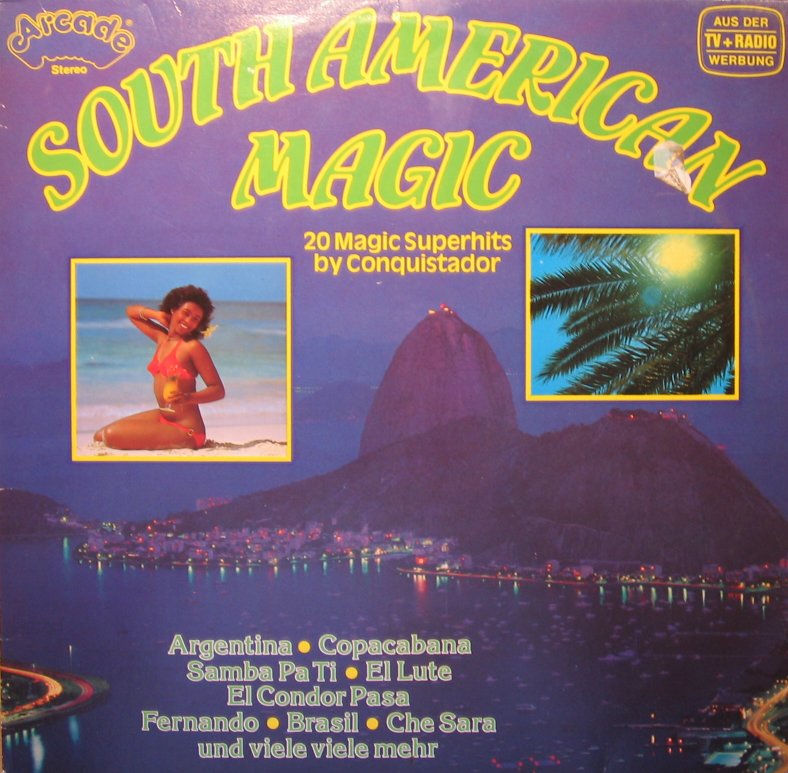
"Conquistador" was an instrumental project of the studio-musican Piet Souer from the Netherlands, specializing in south american rhythms. This album is from the year 1978, when the World Cup took place in Argentina. The song with the same name was used to announce the reports from the World Cup on radio and TV, and it became an all-time instrumental favorite, which is very popular up to now...
Dienstag, Februar 06, 2007
Roberto Delgado - Latin à la Carte (1969)
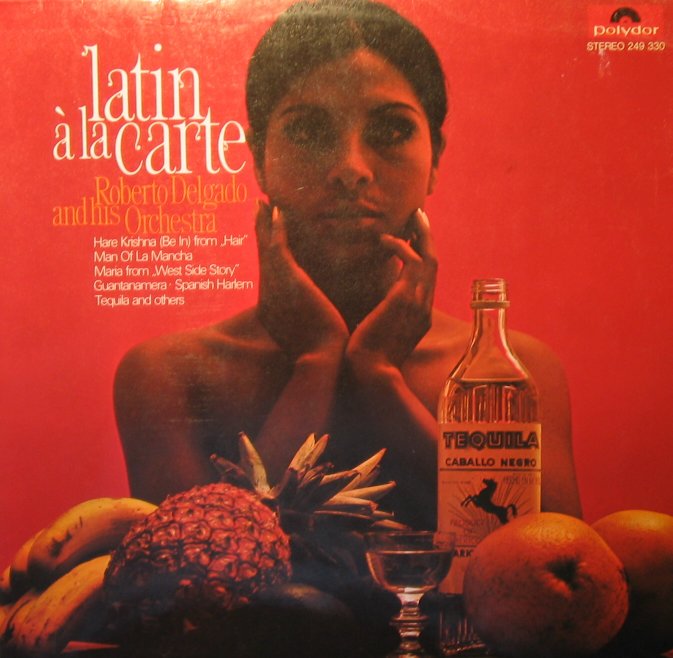
Yes, Roberto... Although he didn´t look like his name was "Roberto". He looked more like "Horst". And that´s right, as we all know very well. His name was Horst Wende, leading his Orchestra with mediocre success, but when he changed his name to "Roberto Delgado", the success came. Even the international. Here´s a perfect example of his Latin-style, well worth getting it, not only because this LP features a great latin version of "Hare Krishna" from the Hippie-Musical "Hair"...
Donnerstag, Oktober 19, 2006
Frank Valdor - Live in Rio (1972)

Frank Valdor. Hmm. Very little is known about Frank, except that he´s from Hamburg and still touring with his topless and non-topless costumed girls and a band of 9 to 16 musicians. I hope, that he changed his girls in the last 30 years... But if you look at the back-cover, you´ll see him in his legendary seventies-Elvis-like-suit, that he still wears on stage. The music is not as bad as it looks, on the contrary! Very good arrangements and surprisingly good orchestrations. And this is not a Live-recording, the title may be a little deluding. It´s a great record of Brazilian music plus it´s got some good-looking girls on the cover. Who could ask for more? And now fetch yourself a mulatto girl (or boy, depends on your taste) and start to dance...
Mittwoch, April 19, 2006
Herb Alpert - Volume 2 (1963)

Herb Alpert and his Tijuana Brass! One of my all time favorites anyhow. I grew up with his tunes, and many songs from that time I only knew as his versions. Great music, although some people disagree... This is Herb´s second best album overall. "But why don´t you introduce us to his best album? Why the second best?" I hear people say. It´s pretty easy: You can buy his BEST album at internet-dealers all over the world, but it´s hard to find his second best. There are many tunes on this record that I know from those happy childhood-days, but not as many as on his best album. Plus it´s a record dedicated to numerology. You didn´t know that? So, I give you a summary:
2.) It´s his second album ever
2.) It´s his second-best album
2.) It´s the album of him I like second-best
2.) This album is on the second shelf in my record-collection
2.) My father bought this album on the 2nd of August
2.) This album features two sides, side A and side B
2.) And how many grooves are there on this record? Yep, two. I counted them.
There are many, many more links to the number "2" on this album, take your time and try to find them. It all boils down to 2. What would be more likely than to name this album "Volume 2"? Now you understand...
Please enjoy Herb Alpert at his (second-)best!
Freitag, Februar 24, 2006
Richard Hayman - Genuine Electric Latin Love Machine (1969)

Hayman, born 1920, started at 18 as a harmonica virtuoso in Borrah Minevitch's Harmonica Rascals, then went with Leo Diamond when Diamond left to form the Solidaires. Later he worked as an arranger for the Boston Pops and he often served as a back-up conductor for Arthur Fiedler. But his best album is this, an early moog album from the year 1969. If you collect moogy stuff, then this one might interest you.
Mittwoch, Februar 01, 2006
Herb Alpert & The Tijuana Brass - The Brass Are Comin´ (1969)

Since many people like Herb Alpert in blogs, I will contribute another one of his works. This is an album from a TV-Special from 1969. Shortly after its release, a burned-out, personally troubled Alpert disbanded his Brass and retired from music for awhile. Indeed, stretches of this record reveal a tired group and a leader whose trumpet has lost much of its old zip. Even so, as on all TJB albums, there are several gems -- the stunning shifts in texture and tempo that enliven the worn-out "Moon River", the chugging bluegrass-tinged arrangement of Villa-Lobos' "The Little Train of the Caipira" that masquerades under the name of the title track, a haunting rendition of the Beatles' "I'll Be Back", the fast samba treatment of "Anna", which is my personal favorite from the Three Suns (you can find it on "Twilight Memories").
Freitag, Januar 06, 2006
Baja Marimba Band - Rides Again (1965)

The Baja Marimba Band was Julius Wechter´s other band. They were, in his words, "... like the Tijuana Brass' bad little brothers. Herb (Alpert) and his group would dress in tuxedos and put on a tight, professional presentation. And we'd flop on stage in big sombreros and old clothes with big pasted-on mustaches, smoking cigars and drinking beer." He joined Martin Denny´s band in Hawaii. Wechter played vibes and many unusual percussion instruments on Denny's recordings, starting with "Exotica" in 1958, through "In Person" in 1962. He was a school-mate of Herb Alpert and he also composed "The Spanish Flea", which became one of the most-recorded hits launched by the Tijuana Brass, covered by everyone from the Doodletown Pipers to Homer Simpson. Although never quite achieving the success of the Tijuana Brass, the Baja Marimba Band did very well on its own, recording nearly a dozen albums for A&M and spawning several copycat groups, including the Leo Addeo-led Living Marimbas on RCA and the Acapulco Marimbas on London. Julius Wechter died in 1999. Here he is with a tame album from 1965, which features the follow up song to their big hit "Comin´ in the Backdoor": "Goin´ out the Side Door"...
Mittwoch, September 28, 2005
Roberto Delgado - 20 South America Dancing Hits (1977)

Born as Horst Wende in Germany, he always felt attracted to Tequila and brown eyed girls. Plain old Horst Wende became known as Roberto Delgado in the late 1950's when Polydor launched his Latin big band stylings on an unsuspecting German public. During the 60´s and 70´s, Wende (under the pseudonym of Roberto Delgado) recorded dozens of albums of Latin music. Here´s a nice example of South American music from the late 70´s. Please enjoy Mr. Wende´s resp. Mr. Delgado´s work!
Abonnieren
Posts (Atom)